
Not all professionals treat baseboards these days, it comes with a stigma that connotes unprofessionalism. I’m not sure who started that train of thought but I think it’s due to knee jerk reaction more than anything else. My first recollection of this becoming taboo was along the time that baits in syringes came to be. The push was for IPM and less chemical and somehow this morphed into sprays becoming evil and baseboard treatments being the root of it. The term ‘baseboard jockeys‘ was bandied about and anyone admitting to this perceived transgression at a CEU’s or other meeting were marked as an evil doers and despised.
Personally, I can’t think of a better way to get a good barrier down as quickly and in a more effective way. Sure you can go along with your bait gun if you wish or dusting under the carpet is also an awesome way to establish a good long term treatment in the same area. I do those things as well and they’re fine, I’m just not happy being called a baseboard jockey because I and thousands of other technicians choose to apply a liquid in the same spot. Also, if you are servicing a home on a quarterly basis do you really think the majority of your customers will be happy paying you $75.00 or more to wander around their home with a syringe and a flashlight? I really don’t think that over exposure or irresponsible usage is a good excuse to criticize this time tested technique either. With a .06% or less in a gallon of water of which treats many more than just one home, where’s the improper use? I’m not here to judge anyone for a method they use as long as it’s according to label and in the best interest of safety but I wouldn’t tag you as backwards or wrong just because I or someone else does it in a fashion they choose.
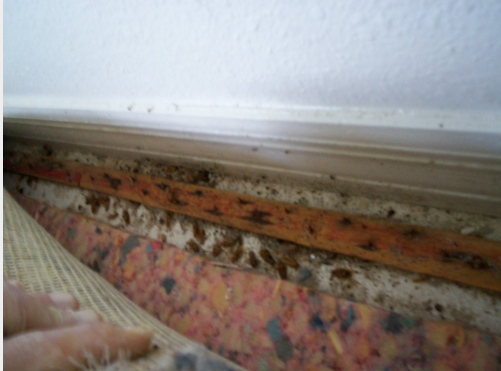
The truth is that baseboard treatments are very effective. Now I’m not so ignorant as to hose down a 10 foot section of well caulked board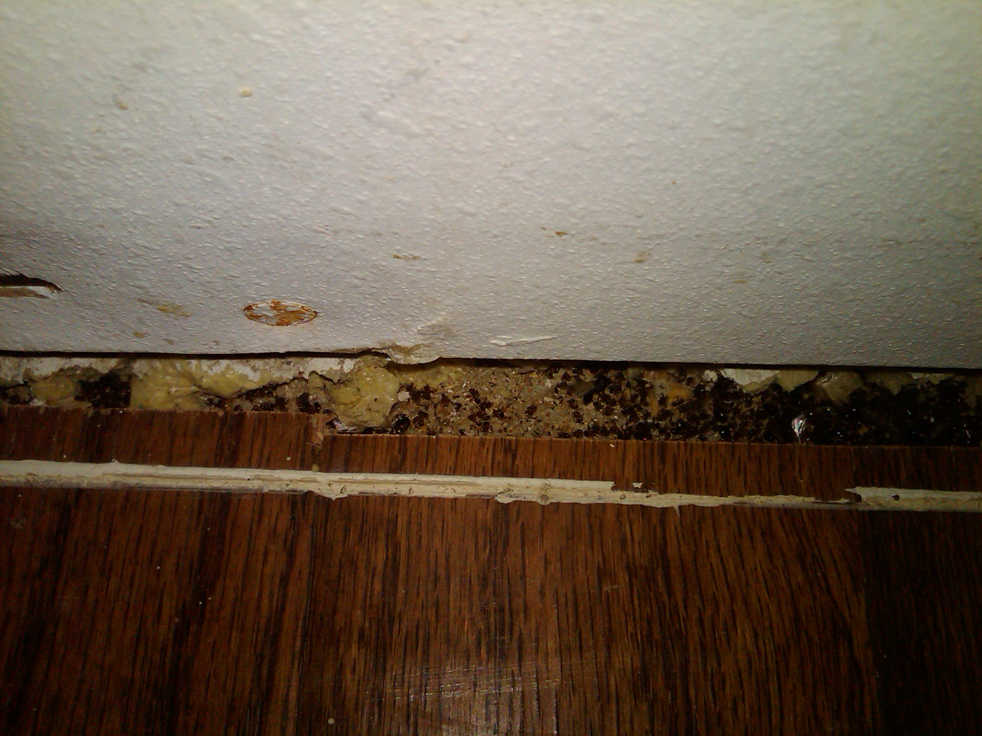 on a wood or tiled floor but have you ever lifted up the carpet to see the huge amount of room there is? Take a look the next time someone has some baseboards removed and see just how many dead bugs you find. It’s Interstate 95 under there with exits and off ramps galore and I for one don’t want to pass up treating that space. A good liquid barrier that can sink into this area might be the deciding factor between you and a horde of marching ants or any number of other insects. Bait, spray, dust or caulk it up if you like but the baseboard area is a legitimate treatment zone and if you leave it alone because it doesn’t fit with some message you heard at a meeting somewhere, go to another meeting!
The knock as I understand it is that it is not according to label but that is not true either. Most labels say you can treat an area as a spot treatment which is either a 1ft x 2ft or some are 2 x 2. The label in no way says it has to be a perfect square so if you do the math a 10 foot section treated with a 1 inch barrier (just to make the math easy) and the label called for no more than a 2 x 2 foot ‘spot treat’ could be done in many ways. Here is one example that the ‘baseboard jockey’ could hang his hat on if he wanted.
For a 2 x 2 ( 24 inches by 24 inches) spot treatment you find that it has 576 square inches but please note it does not say this has to be a rectangle, square or any other defining shape. So treating a 10 feet is– 10 ft x 12 in / 1 inch = 120 inches leaving you with 456 inches or another 38 feet to complete your spot treatment in this fashion. I didn’t write the label.
 Ok, that said what’s my point? Come with me on any job and you’ll find a tool belt almost overloaded with every kind of application gizmo there is. I look like the Terminator and get called that all the time! You’ll also see a B&G sprayer in my grasp which I proudly use and confidently extol the virtues of. What you may also note is that I do not make it a habit of running through the home like a banshie throwing spray around like Brett Favre on a two minute drill. If that is your idea of a baseboard jockey then I tend to be in your camp and agree that doesn’t enhance the professionalism we all strive to achieve for the industry. If however the mere fact that I carry a hand held pump sprayer somehow makes me unprofessional in your eyes then so be it. I don’t happen to agree with you but unless you’re using a flame thrower you won’t find me criticizing you either. I read something somewhere about glass houses or casting the first stone so I try to keep to myself but I’m only human. I’d love to hear your thoughts on this and hopefully I explained my thoughts correctly. You can leave a comment below if you’d like or maybe we can talk about it this Sunday at church. I got some other issues I usually get handled there. 🙂