In the early days of what we might call “modern pest control”, thoroughness of coverage was the key. The average flea job took an entire gallon of mix (usually Ficam W). Any less and the boss would frown at your lack of efficiency and you were all but guaranteed an unscheduled retreat. Termite work was intense to say the least. Even with chlordane’s villainous reputation of indiscriminate killing power, termites needed only a sliver sized break in the barrier to continue ‘unfazed.’ Homes looked like they were on the wrong end of a machine gun fight because termite treaters could leave no void untouched with their hammer drills. Chemicals were decent and strides were being made but without a complete job, pest control services were often left wanting. Pest control has always needed the clients help.
IPM is not a single pest control method but, rather, a series of pest management evaluations, decisions and controls. It also (in my opinion) hasn’t gained a whole lot of traction over the years. It seems like forever that traditional pest control services has promoted IPM and still do to this day but customer cooperation has always been scant. Forcing compliance is an option with contract disclaimers and guidelines but only gets limited success. Clients just don’t seem to want to have any part with helping out a treatment in any real significant way. IPM could stand for I’ll Pass on My 1/2.
Kudos To Green?
The green pest control movement gets credit for pushing IPM farther than it’s ever been but I think their success is somewhat overstated. Lobbyist have successfully gotten a mandate that schools and other government type facilities adopt a ‘least risk’ approach which is heavy laden with integrated pest management practices. While I think this is a good step, I don’t see it as a public consensus and global cry for less pesticides as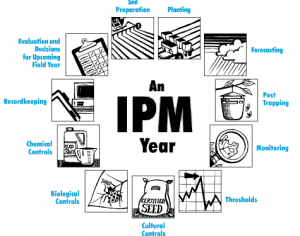 some might have us believe. Even green customers aren’t overwhelmed with IPM. Interesting to note that traditional pesticide use is not ruled out with the least risk approach- it’s held as a ‘ace in the hole’ in case things get out of hand and this reliable and proven way is needed to get stubborn problems under control. IPM here might be called Integrated Pest Mandate.
Do Customers Really Want IPM?
Maybe I’ll be the only one to say this and excoriated by my peers for doing so. I can live with that if what is said is well thought out and not part of the mass hysteria mantra. NOBODY WANTS IPM. Clients want from little to nothing to do with your service because for the most part they feel they are paying you- It’s YOUR JOB. Caulking, screen repair or cutting back bushes isn’t something the public at large cares a thing about doing. What’s more, I don’t know of a whole lot of folks who’d be happy with an $80 service just ‘inspecting their property and filling out a report with recommendations. It’s our own industry with the calls for less pesticides and I just don’t see the acceptance on any wide scale and in my opinion, this is why green pest control has not forged ahead. IPM here stands for I Pay Money- You Get Rid Of The Bugs!
Do PCO’s Want IPM?
Even as chemicals become worlds better and less is needed to target and destroy unwanted insects the pest controller has always had the IPM card in case he needed it. (and we do) It’s on the back of every contract (usually in fine print) and on the lips of every technician, service and branch manager as an arrow in their quiver when problems arise. It’s taught everywhere I’ve been and I don’t disagree. You see, pest control has always been a complaint business and the buying public isn’t paying for excuses about how chemicals are being shared or slow acting products etc. Putting some of the onus on them can quell problems, buy time or just flat out show the client we  aren’t miracle workers and they’ll have to do their part. So many of our clients problems are self induced and pointing out their lack of cooperation or lack of IPM has been a strategy of customer relations, retention and mediation for years. It could be IPM’s other name is, I‘m Packing all My tools but it’d be nice to have your help.